7 eCommerce Website Design Features that increase your Conversion

Do you have an eCommerce website that is visually appealing in design? In spite of aesthetic eCommerce website design, you are somehow struggling to get enough conversions? Well, do you know you can improve your conversions for your eCommerce store to a greater extent? Yes, you can do it by improving your eCommerce website design.

Here we present top 7 ‘must-have’ elements for your eCommerce website design that can skyrocket your conversions:
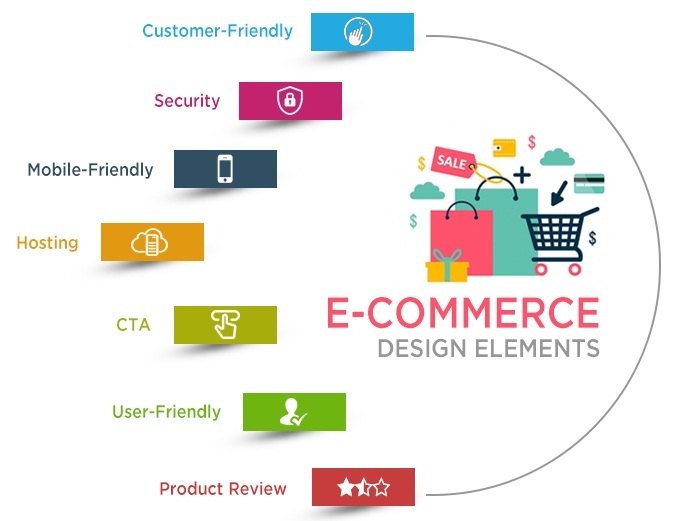
ecommerce website design elements

1. Keep your customer in mind before and during designing

According to Lindi Wheaton, when selecting an eCommerce cart to work with for online business, keep customer satisfaction at the front of your mind. This in return will reward you with customer loyalty.

Designing an eCommerce website that is usable and accessible often requires an investment. You need to invest in quality time and dedicated resources (consultants and Web designers). Of course, this investment pays-off good returns in the long run. In any circumstances, a customer-centric website leads to conversions over a website design that is not customer-centric. Great designs give great results since users feel welcome to your site and get inspirations to buy. Tip: Design your site in such a way that screen-readers can access it. Also, embrace screen-readable descriptions of the images displayed on the page to grab the attention of visually weaken visitors.

2. Double-check about website Security & Platform

Visitors who make a transaction on eCommerce websites are always concerned about the security of their personal and financial information. Just imagine, will you buy anything online from the site which people don’t trust? No, is it? The same way you should think of security concerns for your visitors. You need to let know your potential customers that their data isn’t going to fall into the wrong hands.

You can win the trust of your customers regarding their personal and financial information security by buying an SSL (Secure Sockets Layer) certificate. This is because customers are more likely to reach for payment option while purchasing online if a website is secure. On the other hand, SSL is an effortless way to secure your website. SSL relies on encryption to make the transactions private. Its encryption prevents any malicious intent that can be dangerous for your credit card information.

Tip: You can quickly verify for SSL certification of any website:

  • A URL with https:// instead of http://
  • A green “lock” icon in the address bar

3. A mobile-friendly design full of creativity

We have already emphasized the importance of responsive designs. It is one of the most important website designing trends for the year 2017. Mobile-friendly designs are inevitable since mobile devices have become an indispensable part of our daily routine. Hence, as an eCommerce store owner, your eCommerce website design should pass a check of mobile-friendliness.

According to Statista.com, in 2016, global e-retail sales amounted to 1.9 trillion U.S. dollars, and it is expected to reach 4.06 trillion U.S. dollars by 2020.

Mobile-friendly E-commerce Website  Design

The above projections indicate how online shopping is one of the most popular online activities at a global level. And, impressive revenues are earned through mobile shopping.

As an eCommerce store owner, you need to ensure that your brand and online presence doesn’t reflect another business. Your first impression will be judged by your eCommerce website design during the first visit of browsers to your online store. Your design should be unique to visitors. They should find it worth buying from in it. Invest in custom website design for your shopping cart and enjoy conversions! Tip: If you have a traditional eCommerce website design, redesign it for handheld devices. Responsive designs will let you earn more traffic and revenue, and reach out to a much wider audience.

4. Website Hosting

Have you ever got switched to another website for shopping from your favourite one just because it did not load on time? Or, have you suffered irritation while doing online shopping because the website was too slow to load products or reach to check-out page?

A slow and unresponsive eCommerce website design is a significant restraint. This is because an average online user can only bear load time of up to 3 seconds.

Website_Hosting_E-commerce_Website_Design

From both perspectives, customer experience and search engine optimization, the loading speed of your website is crucial. Some hosting platforms provide dual advantages of native SEO traits as well as offer apps to strengthen their SEO efforts. Tip: eCommerce websites that load in less than 3 seconds have a lot of benefits over websites that take longer to load.

5. A strong and compelling Call-to-Action

A strong and compelling call-to-action (CTA) is a website element that encourages customers to take a particular action while navigating your website.

Do not miss out to create your CTA buttons captivating and intriguing. Such CTAs can attract users and capture their interest in your eCommerce website design. Your CTA content should invite them to follow through by clicking on the button. CTAs facilitate you the prospect to engage users and keep them moving further down the funnel towards a conversion. According to HubSpot, by creating a CTA with a quote from a treasured customer, you can kill two birds with one stone.

CTAs should be industry-specific and far from generic. Use enticing copy that truly encourages the user to click on the button because there is a clear value in doing so. In terms of the design, buttons should be prominent on your web pages and stand out vibrantly so that the user never has to actively look for the button. Make sure your visitors get the option to take multiple actions with the influence of strong and compelling CTA.Tip: Most prominent CTA buttons in an eCommerce website design are“buy now”, “shop now”, “add to the cart”, and others. However, you should experiment a few of these with a few variations of colours, image, and content, on your own store to see which performs best!

6. User-friendly navigation

Your website navigation can lead a user either to continue his journey for long or leave the website forever. You need to ensure that your eCommerce website design is properly structured. A proper structure and easy navigation help visitors to browse and search engines to understand. As far as possible, avoid drop-down menus since it encourages visitors to skip important web pages. According to Kissmetrics, put your most important items at the beginning of the navigation and the least important items in the middle. “Contact” should be the last item on the list, putting it at the far right in top-level horizontal navigation, a standard location.

User-friendly E-commerce Website Design

The reason behind a neat structure of the website is to ensure that visitors should always be sure of where they are on your website. Your website navigation can have an impact on both traffic and conversion. If they are aware of what they want and where they are, a conversion will not be difficult to take place.

Tip: One of the best ways to boost website navigation experience is to append breadcrumb navigation and an HTML site map in the footer section.

7. Include Product Reviews

According to the study of CompUSA® and iPerceptions®, 63% of consumers indicate that they are more likely to purchase from a site if it has product ratings and reviews.

One of the highly important but quite underrated element to promote the reputation and evaluate an eCommerce store is Product Reviews. An eCommerce store has a good collection of consumer reviews on your products has the capability to widen its customer base. Brands like Samsung, Apple, Nike, Levis, and others have gained a significant market share in a short span on the basis of positive product reviews.

It’s safe and sound to stress the importance of customers’ reviews regardless of how well you promote your online stores and products. Customers’ reviews on your products will always have higher weight age and greater impact. They not only read online reviews but also compare positive reviews with negative reviews on the same product. According to Advances in Economics and Business, “85.57% of the participants stated that they read reviews often or very often before they purchase online.

Product reviews can either make or break the ultimate decision of the buyer to buy the product. Hence, in your eCommerce website design, choose a shopping cart that has a space for product ratings and reviews.

Tip: Suggestion on how to include ‘product reviews’ in your eCommerce store.

  1. Incorporate a five-star rating or a 1-10 scaling system below every product.
  2. Make it viewable and easy for the user to assign grades (with as few clicks as possible.
  3. For your top reviews, create a separate landing page featuring testimonials written by registered customers.

At last!!

The ultimate goal of your eCommerce website is to sell your products and generate revenue. This end goal can be drilled down into smaller goals. These goals include email subscription, signing up, increasing social media followers, or sharing a piece of content. You can achieve all these goals with a proper eCommerce website design in a place. And, this is now possible if most of the above-mentioned traits can be taken care of. However, there are a number of tactics you can apply to help with eCommerce conversion optimization and convert your browsers into buyers.

Do you own an eCommerce store? How far your eCommerce website design is optimized for conversions? Do drop in your words in the comments section!
10 Skills Every Software Tester Should Master

Software testing is a procedure performed by a software tester to execute either a computer program or application with an aim to find and fix the software bugs. Software testing can also be understood as the process that validates and verifies either of the software program, application or product.

Being software testing one of the most crucial things, it is very imperative that every software tester should possess specific technical skills and in some, they need to excel. What are those skills?

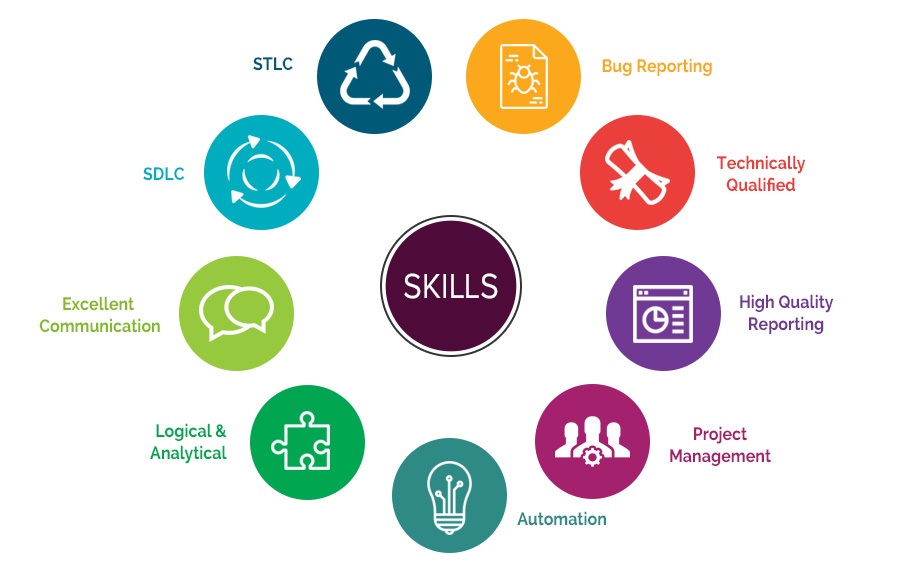
These are some of the most valuable 10 skills that every software tester should master

Testers don’t like to break things; they like to dispel the illusion that things work. — Kaner, Bach, Pettichord

software tester skills

1. Awareness of SDLC skills

Most of the project stakeholders possess a false impression that SDLC (software development life cycle) is a project management methodology. In fact, SDLC is a framework that defines tasks to be performed at each stage of software development process.

For software testers and quality analysts, it is advisable to learn product lifecycle management abilities. Such learning will enable them to comprehend the application improvement undertakings and plan testing cycles effectively. In-and-out information of SDLC will also help the quality analyst to suspect complexities in the application which can control in taking the correct measures in advance.

With this, software testers should also grasp a few development methodologies that pertain to SDLC. To name a few, those methodologies are Scrum, Agile, Waterfall, and V-shaped model among others.

2. Attentiveness to STLC skills

STLC is an abbreviation of software testing lifecycle. Software testers have an important role to perform in the Product Testing Life Cycle, which is also called STLC.

STLC is a grouping of exercises carried out by the team of software testers from the starting point of the project to the completion of the project. Programming Testing Life Cycle is a procedure to improve the overall quality of the product. STLC comprises of various steps such as analysis of requirement, in a grouping, test planning, developing test case, setting up an environment, executing tests, and closing test cycle. At each of the STLC stage, procedures are carried out in a planned and systematic manner to get done a decent quality product.

3. Knowledge of various Bug Reporting Tools (Testing Tools & Techniques)

Bug reporting being one of the core responsibilities, it is essential for every software tester to have knowledge and awareness of different testing techniques and application of testing tools. Testing is not responsible for the bugs inserted into software any more than the sun is responsible for creating dust in the air. — Dorothy Graham

Regardless of the domain and type of application, the acquaintance of various testing types likes white box testing, black box testing, security testing, system testing, unit testing, and others make testers versatile. Also, it helps them work on any sort of project. Moreover, a large number of bug reporting tools are available in the market such as bug tracking tools, test management tools, GUI testing tools, automation tools and similar others. Hence, it is also important for quality analysts to get the knack of these tools so that they can serve diverse requirements and complexities of the project.

4. Well-versed with Techniques of Automation

Automation does not do what testers used to do unless one ignores most things a tester really does. Automated testing is useful for extending the reach of the testers’ work, not to replace it.  – James Bach

With the increasing complexities and integrations in the application, relying on manual testing alone cannot get the job done. For testing browser compatibility, performance, headless as well as database and integration layers, testers should learn automation skills since it imparts higher accuracy because of the business logic and technicalities it can serve. In addition, there are several test automation tools that dedicatedly support particular testing type and come with features to get the tasks done quickly and efficiently.

5. Excellent communication skills

Excellent communication skills are the key to succeed in any field, on any platform. A software tester is also not an exception here. Every tester should also possess good communication skills. Here, effective communication skills refer to good writing, speaking, listening, and reading skills. Quality analysts should communicate effectively with stakeholders at all stages, e.g. updating the status of the project to the clients, informing about requirements to the team, passing on issues to the developers, translating specification documents to test cases, and preparing reports for the management. Over and above, good communication helps to demonstrate a high degree of comprehension which further assists in conveying insights and providing feedback to both technical and non-technical people, logically and rationally.

6. Outstanding Logical and Analytical Thinking skills

Definitely, this is one of the essential requisites of a software tester. In most of the practical scenarios, software tester identifies a considerable amount of the bugs with rationales connected with the code. In such scenarios, analytical thinking ensures that you are capable of thinking out of the box. It should result in the creation of various test cases. Logical thinking helps you understand all Dos and Don’ts when you test as an end client and apply a broad range of prospects you can consider. Your analytical skills and logical thinking can create situations that help you rapidly make your product strong.

7. Top-notch Project Management skills

In any job, apart from core technical skills, one also needs to own time management and project management skills. Similarly, only possessing testing skills will not be sufficient for a software tester in the long run.

As a quality analyst, you should have great learning and thorough understanding of the business process and overall project details. Strong problem-solving skills and top-notch project management tactics will assist you when the going is tough. Besides, having in-depth programming talent will provide you with growth in testing at the code level. If you possess excellent knowledge of the code structure, your contribution to the development team will be significant. You will be able to come up with bugs that will be very useful for the overall software or product.

8. Updated with the latest Web & Mobile Technologies

If you are a software tester, apart from above skills, you should also get updated with the latest web and portable innovations. Then only you will be able to comprehend the sort of use, its built and scalability, and apply a suitable course of action for its testing.

Each and every software tester should keep a tab on both the web and mobile technology advancements. The technological advancements lead them to figure out the coding style and technical challenges to deliver effective QA solutions.

9. Sharp Decision-making skills

Perhaps, this is one of the most fundamental soft skills for any software tester. In most of the scenarios, a large portion of the bugs is identified with basis connected in the code. As ironic as it seems, the challenge of a tester is to test as little as possible. Test Less but Test Smarter – Federico Toledo

Analytical thinking and related decision-making skills ensure that you are capable of thinking out of the box. These skills will help break up a complex software system into smaller units to get a superior understanding and create test cases. Analytical skills and related decision-making talent of a software tester should result in the formation of different test cases.

Logical judgment plays a fundamental role when you test as an end-user and relate all sorts of probabilities you can think of. Creating situations which help in making the product strong can be done quicker by the software tester who possesses strong decision-making skills.

10. Self-explanatory and high-quality Reporting skills

Last, but not least! An ideal software tester must also own good reporting skills. High-quality reporting skills aid to provide the precise status of the test project and application under test to stakeholders. The practice of high-quality and self-explanatory reporting leads to overall better project test coordination.

In addition, it gives transparency to the top management regarding test cases executed; bug encountered; release timelines; and others that in due course lead to take the right decisions on time.

Closing thoughts

Being a software tester, the above-mentioned skills are desirable in you. Testing is a continuous process which runs throughout the product development lifecycle and even posts product development too. No doubt, there is always room for improvement in almost all products. However, if you possess the best qualities and top-notch skills of a software tester, you can for sure come up with the best possible product.

Instagram Marketing Tips – A Booming Social Media Platform

Undoubtedly, Google Plus, LinkedIn, Facebook, and Twitter are the most receptive social media platforms for B2B. However, other platforms are also making their space in the field of digital marketing. They are, to name a few, Instagram, Pinterest, Evernote, Tumblr, Viber, YouTube, WeChat, Reddit, WhatsApp, and many others. All these are preferred for various marketing activities. Dig further to get handy tips on Instagram marketing.

Instagram Marketing Tips – a booming social media platform

Instagram (Instant Photo + Telegram) is one of the fastest-growing social media platforms. Instagram is a great social media platform for online marketing since it is more popular on mobile. On the other hand, mobile is gaining huge toehold day by day by both users and search engines.

Instagram has a dedicated base of users and it provides better engagement as compared to other platforms. Also, put together a guide you the Instagram algorithm for the most possible followers and post engagement.

To make your brand more popular and boost your web traffic, explore the Instagram marketing trends and tips for your business:

Instagram-Marketing-Infographics

Innovative Approaches to Improve Your SEO

According to HubSpot, 80% of a website’s traffic begins with a search query. That is why search engine optimization (SEO) is immensely important. Also, it is must for you to learn how to improve your SEO.

You definitely need to improve your SEO with the below mentioned innovative approaches since it is a vital element for any business or any individual enterprise. The practise of SEO is not only restricted to traffic and visibility, but it is also equally important for creating a BRAND. An excellent implementation of SEO can efficiently and productively convert a startup into a BRAND.

It can even help in maintaining the quality and reputation of a brand in the digital environment for the long-term. However, how to improve your SEO? What are the innovative approaches to improve your SEO?

Here, we present the most known yet innovative approaches to structure and improve your SEO and advance the way you are working for website optimization of search engines.

Top 6 Innovative approaches to improving your SEO

Organic SEO (natural SEO) is a free and usual way to bring traffic to the website from the search engine. An organic SEO is a time-consuming process and results may take considerable time to affect the bottom line, whereas an inorganic SEO provides results in substantial short times.

The implementation of these advanced and innovative approaches will improve your SEO and double your organic website traffic.

improve your seo

1.  Acquisition of link building

According to Jayson DeMers, “Don’t buy links. Earn them, because the quantity and quality of inbound links have a significant impact on a website’s rankings”.

Earlier link building was often done through black hat SEO techniques. However, fortunately after the Google Penguin, an algorithm update that was created to penalize sites that were creating unnatural Backlinks, the scenario is improving and moving towards white hat link building.

SEMRush has given a perfect formula for backlinks:
Quality Backlinks = Relevancy + Trust + Authoritative Website

In order to obtain quality inbound links, follow these innovative yet effective techniques to improve your SEO and boost your rankings:

  • Understand the link-building strategy and innovative approaches of your competitors
  • Build ethical business relationships: promote your articles/blogs on other websites and do blog commenting and posting on various sites having high DA/ PA.
  • Build a professional network on social media platforms and let your followers know about your website and your business
  • Get rid of broken links
  • Implement Schema mark-up to your website. Schema.org provides a particular set shared vocabulary that you can use to mark up your pages so that the major search engines can understand them.
  • Do guest blog posting on quality and relevant sites.

Remember, Google penalizes for paid guest blogging.

2. Strategic approach towards keywords

An unbeatable keyword strategy, as a part of innovative approaches, involves choosing high-performing keywords that drive relevant traffic to the intended website. Selecting the right keywords can make a remarkable difference in SEO campaigns and ultimately improve your SEO results. The right selection of the right keywords will help your website rank well on Google and other search engines. The ideal keyword strategies comprise highly relevant keywords that relate closely to a particular business or are associated with a particular industry.

Always have long-tail keywords to compete with already established SEO.  It means instead of short-tail keywords of 1-3 words like “make money online”, “lose weight”, and “communication skills” use long-tail keywords like “how to make money online with affiliate marketing”, “how to lose 20 kg weight in 3 months without dieting”, and “how to improve online communication skills”.

To determine the success of keywords that improve your SEO, you need to consider the following parameters:

  • Extraction of a general list of keywords and keyword phrases from competitors’ website & target market
  • The relevance of keywords concerning your website content
  • Research of keywords on a regular basis
  • The resemblance of keywords with the vocabulary of the target audience
  • Usage of keywords that are unique to the content for each web page

Remember, Google penalizes for keyword stuffing.

3. Focus on quality of content vs. quantity of content

Google Panda considers the quality of a site’s content when ranking sites in the search results. For websites that have lower quality content or copied content, they would possibly get adversely impacted by Panda.

By now we all know that ‘content is king’ and it is. In fact, it is a “kingdom” and can effectively improve your SEO. Your quality content brings engagement and ultimately boosts brand awareness. Has content optimized thoroughly on your each and every web page?  The key here is to come up with engaging and quality content is writing for your users, search engines will then automatically take care of your rankings.

Of course, long-form content performs well; however, short-form content hasn’t yet lost its charm. So, maintain the right amount of proportion of long-form vs. short-form blogs and other content.  In a nutshell, have all sort of content (textual and visual i.e. images, infographics, GIFs, and videos), to delight your readers with a variety of quality and original content. According to one school of thought, good quality content matters more than the domain age in the long run; which resultantly improve your SEO.

And hence, original content is critical. The spinning of content will never get you good rankings. Your blog or website can even get penalized by Google for such low-quality content. For whatever content you publish on your website, you need to ensure that the content is user-friendly. Visitors prefer content that reads in straightforward and easy-to-understand language. Google boosts all those websites that can engage the readers to keep them hooked on the site longer.

4. Optimization of on-page factors

You can earn quality backlinks through strategic techniques and innovative approaches to off-page SEO. However, your on-page factors also need to be optimized for better rankings.

Here are a few handy things which you can take care of to improve your SEO:

  • Your SEO efforts can go waste if you use either too long or too short titles and descriptions
  • Always have your Focus Keyword in Meta titles, Meta descriptions, and headings
  • Check the presence, relevance, and optimization of Title tags and Meta descriptions on each of your website page

As compared to Title tags, Meta descriptions have lost power in the ranking algorithm; however, it still helps in increasing clicks from search results. So keep them most relevant and attractive.

Also pay due attention to conversion optimization aspects such as site speed, image optimization, video optimization, code optimization, the aesthetic look of the site, and more.

5. Implementation of a timely website audit

An innovative SEO is just not possible if your website audit does not take place on a timely basis. A website SEO audit should not miss on any of the following parameters:

  • Elimination of Site and URL errors
  • Evaluation of XML sitemap
  • Assessment of content
  • Assessment of site speed and canonicalization
  • Verification of Robots.txt files
  • Authentication of site architecture
  • Ensure your website is responsive

An audit report of your website will reveal insights on your site’s ranking criteria, bounce rates, user engagement time on any specific page, search percentages, and website traffic. Furthermore, it also aids you to address broken links, response time, download time, and other HTML errors, if any. Get performed your website audit on a timely basis by an SEO expert to get the exact review needed for search engine optimization.

We recommend the following tools/tips for a great website SEO audit:

  • Google’s SEO Guidelines
  • Google Analytics
  • Moz Title Tag Preview Tool
  • Google and Bing Webmaster Tools

6. Measuring SEO success based on analytics

Improvement cannot be made possible if you are not aware of flaws. Similarly, SEO cannot be improved if you do not measure the effectiveness of your SEO efforts through analytics.

In Google Analytics, track your SEO campaigns. Apart from monitoring your ranking, keep an eye on your non-branded traffic, improvements in engagements, and other parameters. Figure out which online campaigns bring the most traffic and conversions and why they are performing better. Check the location of your best visitors. With the help of ‘site search’ function, the site determines what people are searching on the web and what they are looking for on your site. To check your goal conversions, checkout at what point of site people abandon the shopping cart.

Conclusion

SEO is more like fishing rather than hunting. Search Engine Optimization is a cornerstone of any good web marketing strategy. Good SEO skills are excellent web management skills as well since they result in standard-based website implementation, well-organized information architecture, and well-written on-topic content.

Are you ready to improve your SEO? If yes, right away implement these innovative approaches and experience the exquisite results. If you have anything else to add, do drop in your words in the comments section!

Top 6 Facebook Advertising Strategies for Instant Conversions

According to Sprout Social, more than 1.86 billion are monthly active users on Facebook, which includes a 17% year over year spike since 2016.

This shows how important and preferred Facebook is as a social media network. Facebook has expanded its wings and has moved beyond just a network to connect with family and friends. It is, in fact, considered one of the most important social media marketing platforms. Keeping the amount of audience that visits Facebook and its growing importance in digital marketing services, you should not ignore the dominance of Facebook advertising strategies that bring instant conversions.

A lot many search marketers are either unclear or unaware of how to advertise on Facebook. Hence, first of all, your entire social media marketing strategy has to be crystal-clear and completely in-line with your social media goals. Facebook advertising strategies also require the same logic and action.

How to build Facebook advertising strategies that bring instant conversions?

Facebook advertising strategies come in various varieties. The options include the promotion of your business page, promotion of your posts on a business page, promotion of your popular posts on which users have taken action, or promotion of your website.

A Facebook advert makes it easy to find the right people, capture their attention towards your advertisement, and get the desired results. According to KISSmetrics, Facebook ads are more like display ads than search ads. Facebook advertising strategies should be used to generate demand, not fulfil it.

If you are worried or unsure about how should you advertise on Facebook, here is the suggestion!

  1. Figure out at which stage your Facebook advertising strategies will fit
  2. Build ideal customer audience i.e. connect with your target audience
  3. Display advertisements to your target audience whom you already know
  4. Perform A/B testing of your creative advertisements
  5. Track performance of your Facebook adverts and incorporate improvements in your Facebook advertising strategies.

QL Tech Tip:

In Facebook advertising, the ad content works well on the basis of three parameters:

1. Relevant target audience

2. Quality of content and

3. Perfect timing of posting content including timely interactions

Keeping the above mentioned three points in the mind, your Facebook advertising campaign needs to be prepared.

Facebook ads can appear in your target audience’s News Feed or right column of Facebook. Run through various types of Facebook advertising strategies which can bring traffic and boost conversions.

Types of Facebook ads

1. Page Post Engagements

These ads are basically the posts that invite you to like, comment, or share. Hence, such ads are targeted to boost engagement of the posts of your fan page.

Page Post Engagements

2. Page Likes

The amount of likes serves as social proof. And hence, the higher the likes, the better the social image. These are the most popular category of Facebook advertising strategies. Because once your audience base increases through likes, it will spread awareness of your brand in their networks too if they like or share your posts.

Page Likes Facebook advertising

3. Clicks to Websites

Such facebook ads are targeted to take some desired action. Such ads are best fit if you want your target audience to visit your website by inviting them to read your blog or any offer.

Clicks to Websites Facebook Advertising

4. Website Conversions

These ads rather than focusing on any other information direct user to take the desired action on their CTA. These ads work best when you want to promote any special offer or limited time discount coupons.

Website-Conversions-Facebook-advertising

5. App Instalments

These ads are getting attraction from the young crowd. Such ads direct users to download their app and use it rather than browsing their sites on the internet. Flipkart app, Ola cabs app, etc.

6. Event Responses

These ads are treated as special ads. Whenever any event or webinar is organized by your business and you want to promote it over social media to invite attendees, these ads are the best options.

Event Responses Facebook Advertising

7. Lead generation campaigns

Lead generation encompasses two elements: generating interest in your business and then capturing it. And hence, lead generation campaign advertisements often ask a target audience to take action.

Lead generation campaigns Facebook Advertising

8. Offer Claims

On special days or special occasions, brands prefer to go for this option to boost sales. For instance, Social Media Perth had invited people to join their special event of entrepreneurs meets on their 4th birthday, June 27, 2017.

Offer Claims Facebook Advertising

Now let’s have a look at how Facebook advertising strategies work for a brand for instant conversions.

As seen above, there can be a variety of advertisements based on marketing goals. Before you start with your Facebook advertising campaigns, run through the below-mentioned tactics.

1. Select a campaign based on your marketing goal

For campaigns and paid advertisements, Facebook has three objective categories: Awareness, Consideration, and Conversion. According to Charlie Lawrance, “The best way to determine your campaign objective is to work backward from your goal.”

It means if your marketing goal is to generate sales for your ecommerce business, for instance, you could offer the customers of 20% discount on their first purchase to tempt them to make a transaction on your e-commerce site.

For all three categories, the structure of a Facebook advertising campaign consists of three levels. They are a campaign, an ad set, and an ad. The first level, the campaign, is the starting point of your Facebook ad.

  • At the first stage, you need to set the advertising goal at the campaign level, for example, get more page likes, drive more traffic, etc.
  • At the second stage of the ad set, you need to define your targeting strategy by organizing factors like targeting, budget, and schedule.
  • And, at the third stage, finally, your ads are creative visuals in the form of images or video clips which will drive your target audience your offerings.

2. Make your brand popular by creating interest in it

It is sort of creating awareness of your brand. This works best when you target the audience for such campaigns who have already liked your page and are aware of your business and social media presence. Create compelling advertisements that create interest in your brand.  Such ads are best for start-ups since they do not focus on generating sales but they more work towards the establishment of brand awareness.

3. Build and test the creativity of your advertisements

The ad level is the final/third stage of the Facebook campaign structure. Your final published ad copy is going to be visual in front of your audience. So, it is imperative that you choose your image, content and timing of ad very wisely. Do not compromise on the creativity and format of your advertisement.

Facebook advertisement format is divided into 6 elements:

Facebook advertisement format

It is must to do A/B testing of your Facebook advertising elements to check what is performing well over others. Three elements can be tested i.e. image, copy, and timing. However, not all elements can be tested in a single experiment, do it one-by-one and check the relevance scores. If an ad is not at all doing well, replace it with another. However, introduce new ads when the relevance scores of your current ads decline, often due to ad frequency, as the best way to continue to generate results from your campaign. Moreover, frequent blunder people commit is to kill the campaign and start a new one.

4. Identify the products/services that you want to promote vigorously

If your marketing goal is maximising conversions, focus on creating campaigns of the products/services that are the best among the lot. And, you need to promote them vigorously. Through your advertisements, convey and convince your audience why they are best for them.

5. Encourage users to participate in activities

If your marketing goal is to succeed at the consideration stage, create advertisements that compel users to participate in various activities you want to perform them. Here, such type of ads is applicable for almost all brands that are looking forward to growing their subscriber base.

For example, if you are promoting your bags and purses, write a copy defining how a particular product will define their style statement and ask them to read a related blog or subscribe to your newsletters.

6. Offer incentives at the conversion stage

The conversion stage is often an important stage of your marketing funnel. At this stage, create advertisements offering some special discounts, coupons, or vouchers. These are the best when your target audience is your active fan following. Here, you can offer them the discounts on their special events like: “Get 20% off on your anniversary”, or “Get FREE vouchers worth $XX on your birthday for shopping above $XX”.  Precisely, Advertise to your audience with these tactics in mind in order to increase brand trust, awareness, and overall conversions.

Conclusion

Prior to creating your Facebook advertisement campaign, dedicate your time to define your campaign strategy. It is a must for you to decide how and where in your sales funnel you can use in creating Facebook ads to grow your business.

Do share your thoughts on how effectively you are using your Facebook advertising strategy to boost conversions.

All You Need to Know About The Importance of Social Media Audit

Audit term is not just restricted to the finance and accounting domain. It applies in each those sectors where functions have been carried out with the help of strategic decision and dedicated investments. Digital marketing is also not an exception here. As a digital marketer, with the help of social media audit, you need to evaluate each of the digital marketing activities to judge its performance and handle its areas of improvements.

Based on the results, corrective actions need to be taken from time to time to enhance performance and sustain competition. Along with search engine optimisation and pay-per-click, social media marketing is equally important to spread brand awareness and boost online presence. A social media audit evaluates the effectiveness and ROI of social media marketing activities.

What is a Social Media Audit?

Social media audit is a key ingredient of a social media marketing plan. It evaluates how well your current social media performance is, how it works for you, and how better you can explore it for business benefits.

Why you need Social Media Audit?

For any business that has a social media presence on one or multiple networks needs to conduct personal social media audit from time to time.

The fundamental purpose is:

  • to ensure that each of your social media profiles is on brand and functioning correctly
  • to make sure that you’re using the right channels for your brand
  • to identify and eliminate any inactive or abandoned accounts
  • to analyse how relevant your social media activities are on your marketing goals

A social media audit reflects a complete picture of your activities in the form of metrics such as engagement, impressions, likes, retweets, shares, etc. The contemporary approach also focuses on interactions, sentiments from engaged users, response rates, and response times.

How to Conduct a Social Media Audit?

Have you ever wondered why you are a member of various LinkedIn groups but not getting any engagement? You do share your blogs and posts in different Facebook groups but unable to churn likes on it? You have made your pinned post both aesthetic and valuable in the context of content but failed to earn impressions? Are you consistent with your posts and posts mix across all channels? Well, you can unpack all such answers if you conduct a social media audit with a correct approach.

You need to have analytics in place for all platforms. Make a discipline to maintain monthly post schedule.  At the end of the month, when you pull your monthly data from analytics, you will get a list of each of the post along with the posted date, time, permalink, reach, engagement, likes, retweet/repost, share, mention, impression, etc.

As a social media marketer, you should focus on engagement and impression of your tweets. Then analyse top 10 or 20 posts based on the highest reach, engagement, and impression. Once you have your list of top posts ready, it will be easy for you to interpret what type of content is working well for you.  You will also come to know the best time to post. Also, it will pave the smooth way to strengthen your A/B testing regarding timing, content, and images.

Focus points while conducting Social Media Audit

Focus Points Social Media Audit

1. Analyse the quality of your engagements

How great is it to see so many unread notifications daily morning in each of your social networks? Yes, it gives immense satisfaction to realise that your profile and social presence have come into notice of others and they have preferred to interact with you.

However, have you ever verified those accounts that have liked, shared or ping you in one or other way? If they are from similar industry and have similar interest, keep them engaged and build online rapport with them. Vice-versa, if they have by chance come across your feed and do not relate to your industry, you no need to invest a dedicated time in keeping them active. Because one or other day they will either discontinue following you or stop posting on your feed. The reason is the difference between theirs and your areas of interest and goals of social media.

2. Identify and eliminate branding gaps

Whatever social media audit results you get based on the analysis, divide it into two areas from your social media marketing goals perspective, strong areas and areas of improvements. Have a consistent focus on your strengths and convert your weak points into manageable areas.

Your social media presence should spread your brand awareness. Each of your social profile should speak about your brand and if required, keep making improvements as and when required.

Try to grab the attention of your target audience with the help of posting curated content, tagging them, mentioning them, sharing relevant posts, and keeping the important post as a pinned post.

3. Keep a note of personal messages

Not everyone will post on your feed directly. Some may tag you, or some may send you a private message. Remember not all direct messages are auto-generated. Most of the social media marketers are aware of the annoyance that DM creates.

It is very likely that your DM is knocking the door of opportunities for you. Never ignore them. If found irrelevant, you may delay replying but do read them! Similarly, keep sending personalised messages to thank, congratulate or acknowledge the things which matter to you.

4. Review your posts

This though sounds pretty obvious is of utmost importance. Your social media profile is the face of your business. Neither you can fake anything there, nor can you post anything on your feed that can harm your brand image.

Study your audience and their tastes; accordingly, tailor your content to post. If they like visual content, have a more focus on videos, podcasts, infographics and images with little text.

Keep a note of your most engaged posts and analyse them to figure out what was the high point in it that has benefited you well. Similarly, have a look at all those posts that were right from your point of view but somehow failed to perform well on social networks. Compare the results and draw conclusions.

Social media is a very handy place for communication and brand promotion. So, carefully and enthusiastically keep walking ahead in your journey.

Here are some tips for social media audit for the TWO most popular platforms which we believe: Twitter and Facebook.QL Tech Tip: Make the use of social media automation tools like Buffer, Hootsuite, Post Planner, and others to schedule your posts so that you can reach the maximum audience when they are online. It will give you good results in your analytics.

Twitter Audit

Twitter is the most loved platform for users. It’s 140 character limit makes it more interesting. Furthermore, you can add images, links and Infographics to make it more interactive. Consequently, these attempts increase your post reach and network.According to Internet Live Stats, there are some 6,000 tweets sent per second on average, which translates to over 350,000 tweets per minute or about 500 million tweets per day.

Your social media audit for the Twitter platform should focus on:

  • Likes on your posts
  • Shares of your posts that can drive traffic to your website
  • Comments and interactions on your posts
  • Clicks and opens of your links and images
  • Video views
  • Number of followers
    • are they increasing, decreasing, or fluctuating consistency
    • are they relevant or fake
    • are they active on their feed
  • Number of followings – how many relevant people are you following
    • are you following the people that belong to your industry
    • are you following your dedicated followers
    • how many of your following falls under fake identities
    • what is the social authority of your following
    • what is the engagement level with and from following
  • Post reach
  • Number of mentions
  • Social authority

Twitteraudit.com tool is a handy tool that finds out your fake followers on Twitter

Social Media Audit for Twitter

Twitter Analytics is the very first place to get an analysis of your monthly performance. You can also make use of various FREE and paid tools available. To name a few, they are:

  • Sprout social
  • Twitonomy
  • Twitter Counter
  • Moz Followerwonk
  • Tweepi

Fanpage Karma will analyse your and your competitors’ accounts across Facebook, Twitter, Google+, Instagram, YouTube and Pinterest.

Facebook Audit

According to the recent article of dreamgrow.com, Facebook has retained its dominant position among all social networking sites.

Social Media Audit for Facebook

Considering the traffic Facebook can bring to your website, one should make the most use of it as a social media marketing platform. However, it is a crowded place, so you need to be active with your marketing skills. Paid advertisements work very well in case of Facebook. The Facebook audit will reveal how good your posts and ads are performing and what content suits best in front of what demography.

Facebook page audit is aimed to ensure that you are optimising your marketing efforts on Facebook. Like Twitter, Facebook also provides analytics on the same lines i.e. engagement, reach, impression, and others. Your social media audit for the Facebook Page should focus on:

  • Audience
    • are we posting in front of the right audience
    • are we posting the content which our audience wants
    • are we replying to each of our message and comments on our posts
  • Content
    • are we enough flexible in posting our content with respect to taste and timings of our target audience
    • what type of content is working well and why
    • what is the content mix we are posting and is it suffice based on competition and industry standards
  • Brand promotion
    • does our Facebook page, profile picture, and cover image provides all information which a user needs to know
    • are you reviewing your thumbnails which are in display for your audience
    • are we presenting our brand consistently
    • are we confusing our readers and users with brand identity since we have multiple Facebook pages for multiple goals

Facebook Analytics is the very first place to get an analysis of your monthly performance. Furthermore, there are various FREE and paid tools available, like:

  • Socialbakers
  • Facebook Insights
  • LikeAlyzer
  • Simply Measured
  • Cyfe
  • Agorapulse
  • Quintly
  • Comfo
  • Brand24
  • Scoreboard Social
  • Rival IQ

QL Tech Tip: To boost engagement on Facebook, maximise the use of tab apps.

Closing thoughts

Here, we have tried to facilitate our readers by providing the most popular tools for Twitter Audit and Facebook Audit which every social media marketer wants. The importance of Social Media is undeniable, and so as social media marketing. And what’s the use of such marketing activities which we don’t measure to analyse the importance and effectiveness. Hence, social media audit is crucial. The topic of social media audit has very broad coverage. One blog is not enough to conclude on any results. Keep checking our resources section, there are many FREE resources lined up for you which will aid you in conducting your social media audit in line with your marketing goals.

Most Impressive SEO Trends That Actually Came True

The last year 2016 was quite a roller coaster for search marketers due to substantial and unforeseen changes took place in paid search marketing, for both Google and Bing platforms. Taking into consideration these changes and their impacts, at the start of the year 2017, lot many people have published numerous posts regarding most prominent and top SEO trends to watch out for. Various predictions were made on SEO, search engine, and ranking algorithms. Now, we are halfway through the year 2017. The exciting part is most of the anticipated trends proved to be of significance for SEO.

Here we present the most talked SEO trends and how it proved their prominence in this year:

SEO TRends

1. Video content is booming

People love audio-visual content over textual content. As predicted at the start of the year 2017, many established as well as newbie brands are banking their advertising campaigns on video content. With so many active social networks like Instagram, Facebook, and Snapchat where people love to share their stories, how come brands stay behind this trend?

Crowdcart is quite prominent in the race of video advertising. Crowdcart helps to connect and engage with your audience through LIVE video. It enables to teach, share, and connect over webinars, Q&As, live courses, and summits.

Coming back to video advertisements, popular brand Coca Cola’s advertisement #LiftTheFeeling has gone viral on digital media. The video garnered over 20 million views (around 12+ million views on official YouTube page and around 9 million views on the Facebook page of Coca Cola) in just two days of the advertisement.

Video Content Advertisement in SEO

The ad titled ‘Elevator’ has been made under the ‘taste the feeling’ campaign keeping the Indian audience in mind. It is about a tale of togetherness between two strangers, a celebrity and a diehard fan. The video content focus on those two strangers who meet up in an elevator and coca-cola helps them to break the ice and make the connection between them. Since it was an elevator, they promoted it as ‘lift the feeling’. The amazing dance and music quality make video content more interesting.

Before the digital launch of the ad, teasers of the campaign sent the consumers in a dither guessing what is next. Creating curiosity amongst viewers, the launch on digital media had consumers liking, sharing, and commenting persistently, which resulted in greater engagement between consumers and the brand.

Later on, the ‘Taste the Feeling’ campaign was featured by more than 200 countries across TV, outdoor, print, retail signage and more.

Here is the curated list of the most popular video ads (visual marketing) on YouTube in the year 2017:

Samsung: This is a phone (March/April 2017)

this is aphone video ad in seo

A Better Super Bowl | NFL Hyundai Super Bowl LI (February 2017)

super bowl video ad in seo

2017 Kia Niro | “Hero’s Journey” (February 2017)

hero's journey video ad in seo

2. User-generated content is shared and perceived most

If you serve what your audience is seeking, you are surely going to rock with all your campaigns. But, how to know what they are looking for? There is a marketing gimmick called user-generated content. User-generated content (i.e. UGC) comprise any form of content that is created by users and consumers about a brand or product. Ask users indirectly what they want and accordingly tailor your content marketing and SEO content.

Especially on Instagram, UGC is highly prevalent, shared, and perceived. UGC generates more engagement on social media and from there attract more organic traffic towards the website.

According to HubSpot, 76% of individuals surveyed said they trusted content shared by “average” people more than by brands, and nearly 100% of consumers trust recommendations from others.

Let us take a glance over how SEO can be benefited with the help of user-generated content.

Wayfair, an online furniture store, is one of the world’s largest online destinations for the home decor. Wayfair is running a fun UGC campaign since 2016 to boost its online sales. Basically, this campaign intends to let customers display their online shopping experiences using hashtag #WayfairAtHome. Many buyers who did online shopping posted millions of content using this hashtags. This hashtag is highly popular on Instagram, Pinterest, and Twitter. And, in June 2017 also, people are highly using this hashtag to convey their experiences. Lots of UGC is available for this brand and it is cashing on it through varied advertisements.

Here, are some of the recent examples posted on social media:

User-generated content for SEO

Whatever hashtags are posted on social media by users, they all are reposted by the brand with relevant hyperlinks that can drive organic traffic and boost conversions. The user-generated content serves two-way benefits – it acts as testimonials plus it provides an exact idea of what they want and how they feel about the specific product/service.

3. Intense content paves a smooth road for SEO

“Don’t optimize your keywords, optimize your content”. This was emphasized as one of the top SEO trends for the year 2017. Unlike past years, the focus has shifted on comprehensive and long-form content for SEO to provide value to the readers. On the other hand, search marketers can also have a higher number of Backlinks and internal links in the intense and long-form content, which eventually boost their SEO. Airstream is a popular and iconic American brand, dealing in Travel Trailers and Touring Coach. Their policy is “Let’s not make any changes, let’s make only improvements!” They well applied their philosophy for their content to boost their conversions. They were not much worried about the number of visitors, but their real challenge was their conversions.

content paves smooth road for SEO

According to Hileman, the team needed content that would appeal to people who were higher up in the funnel. They did take help of lifecycle content (by developing gated and lifestyle-centred eBooks, revamped newsletters) to boost their conversions. The new content they created included guides — such as “Road Trips Across the U.S.” and “Farms & Wineries” — as well as ebooks like “Why Airstream?”

Their textual content was beautified by adding image content. Earlier they discovered that inclusion of an image of the cover of the eBook resulted in much higher conversion rates than just a text-heavy page. Later on, they also realized that video headers on a landing page distracted people from performing an action on their CTA buttons. Minor updates resulted in huge conversions, their brochure download conversion rates surprised and satisfied them with good traffic.

4. Personal branding – verified as an undisclosed SEO strategy

Branding makes a huge difference in your overall online impression and foothold. Personal branding is an unexplored yet very powerful tool for your SEO. The biggest benefit it provides is the trustworthiness of the brand. In the digital marketing field, there are some giants who have established their personal branding very well. People just trust their offerings by their names.

Examples include:

Neil Patel: there is hardly anyone who hasn’t heard about him for SEO and digital marketing. He has consistently grown his personal brand through blogging and guest posting on sites like Entrepreneur, Forbes, Inc., etc. Owner of neilpatel.com, quicksprout.com, and crazzyegg.com. Also, a co-founder of hellobar.com and KISSmetrics.com

Rand Fishkin: He is the CEO and Co-Founder of SEOMoz, a leader in the field of SEO tools, resources & community. Furthermore, he is the host of Whiteboard Friday, co-author of a pair of books on SEO, co-founder of Inbound.org, and serves on the board of the presentation software firm, Haiku Deck.

Gary Vaynerchuk: He runs VaynerMedia. He is regarded as one of the well-known entrepreneur personal brands. He’s active on Snapchat and YouTube and his podcasts are everywhere on the internet.

Jeff Bullas: His blog receives over 5 million visitors a year. He helps businesses and personal brands with digital marketing services that include blogs, social media marketing, and search engine optimization.

Larry Kim: He is the founder and Chief Technology Officer at Mobile Monkey. In addition, he is regarded as the most influential PPC expert.
No doubt, building a personal brand takes a lot of efforts and consistency matters. But, one should try it out persistently. A strong and recognizable personal brand can attract tons of organic traffic.

5. AMP does make a significant difference in your SEO

As we already know that Google favours the websites which have switched over to AMPs.

According to Google, more than 50% of search queries, globally, are now take place from mobile devices.

Here’s how 2Dogs Media churn out huge results from improvised SEO due to AMP in place.In November 2016, there were no AMP pages indexed on the website. On 2nd December 2016, they implemented accelerated mobile pages on their WordPress website. They also submitted a new sitemap into Google Search Console so that Google can easily notice the site. On the first day of AMP installation, they experienced website traffic on all 14 AMP indexed web pages.

Proof AMP

Not only this, other massive benefits include:

  • Within 6 months of AMP implementation, observed much higher CTR on AMP pages as compared to traditional pages
  • Improved website speed (earlier non-AMP page load time was 11 seconds which went down to 2.2 seconds for AMP pages, with reduced page size and reduced requests)
  • 40% of the traffic on AMP pages was organic (Excluding referral, social and direct traffic sources)
AMP implementation

The gist of the entire story is if a greater portion of your traffic comes from mobile, implement AMP NOW! However, even if your traffic sources include both desktop and mobile devices, then also we suggest you go for AMP. This is because we cannot deny the fact that mobile optimization is already extremely important in SEO strategies in 2017.

CLOSING THOUGHTS

The above-mentioned SEO trends are just a portion of the chunk of anticipations. There is a high reliance on other trends as well, which are: voice search, user intent, the influential role of structured data and schema implementation, the influence of artificial intelligence on working of algorithms, local search, cross-channel marketing, and optimization for user-intent. As a general tip, continue to optimize your online presence to boost your SEO.

In case you feel something else can change the scenario of SEO in the rest of the year 2017, do drop in your words in the comments section, we would love to hear from you!

Instagram – Boost Your Social Media & Digital Marketing

Social media – who doesn’t know about it? In this digital tech savvy world, social media has gained a massive toehold. Various social media platforms are explored in-depth for digital marketing. No doubt, LinkedIn, Facebook, and Twitter are the most receptive social platforms for business; however, various platforms, including Instagram, are preferred for various marketing activities; they are:

Social-Media-Marketing-Experts-2

Facebook dominates among all social media marketing platforms as a source of social traffic and sales.

Instagram is one of the fastest-growing social media platforms. The name Instagram is derived from a combination of “Instant Photo” and “Telegram.” Instagram, an incredible social media platform for sharing pictures, was launched in the Spring Season of 2010. In a less than a decade, this platform has grown into a powerful social media force, not to be overlooked.

Since 2012, Instagram is owned by Facebook. This acquisition of Instagram by Facebook shows where digital marketing trends are heading. Since both social media platforms are owned by the same owner, you can easily connect these two to boost your digital marketing strategies.

In the recent past, Instagram has literally competed extremely well with the dominant top four platforms viz. Facebook, LinkedIn, Twitter, and Pinterest. Instagram has more than 500 million users.

Instagram is a great platform for online marketing since it is more popular on mobile; moreover, mobile is gaining huge traction day by day by both users and search engines.

People are prioritizing visual content over plain, and hence, Instagram is considered as one of the most effective social media marketing platforms for the coming days. As a business owner, you should use Instagram to market your products and services. Apart from product images, you can also share videos. Its ‘LIVE recording and sharing’ feature are getting way popular bit by bit.

Explore Instagram as a social media marketing platform

Social media management starts with the base of your followers and followings. To boost your Instagram marketing, first of all, you need to boost your followers on a constant and stable basis. The more people are aware of your brand, the greater your chances are to potentially reach your target audience.

Let’s run through the tips and tactics on how to explore Instagram as a social media marketing platform to make your brand more popular.

1. Hashtags – use unique, crisp, meaningful, and attractive

Hashtags are not only important for Twitter; they also play a prominent role on Instagram, Facebook, Pinterest, LinkedIn, and google plus.

According to Dominique Jackson, the beauty of hashtags for Instagram is they make your content discoverable and increase your chances of engagement.

It’s a big way of how users can find you through their mobile Instagram searches. As compared to Twitter, where you’re not restricted by character count. You can include a few tags in your posts to get connected. While deciding on the hashtag for branding, it is advisable to create brand-specific hashtags. Try to keep it as unique and crisp as possible.

Make usage of both sorts of hashtags; brand-specific hashtags and community-specific hashtags. Brand hashtags help you to popularize your brand and community hashtags help you to become more discoverable.

Try multiple variants of hashtags such as brand-specific hashtags, general hashtags, and trending hashtags, to get noticed in searches.

Examples of brand specific hashtags are:

#PutACanOnIt—Red Bull

#ShareaCoke—Coca Cola

#SpeakBeautiful – Dove

#TweetFromTheSeat—Charmin

#OreoHorrorStories—Oreo

#WantAnR8—Audi

An ideal general hashtag should be prepared with two words over a single word to make it meaningful e.g. rather than #QL, #AskQL is a better hashtag.

2. Emojis – use the right Emojis to keep your audience engaged

In any sort of online communication, Emojis is the best substitute for the absence of facial expression, tonal inflection, and body language.

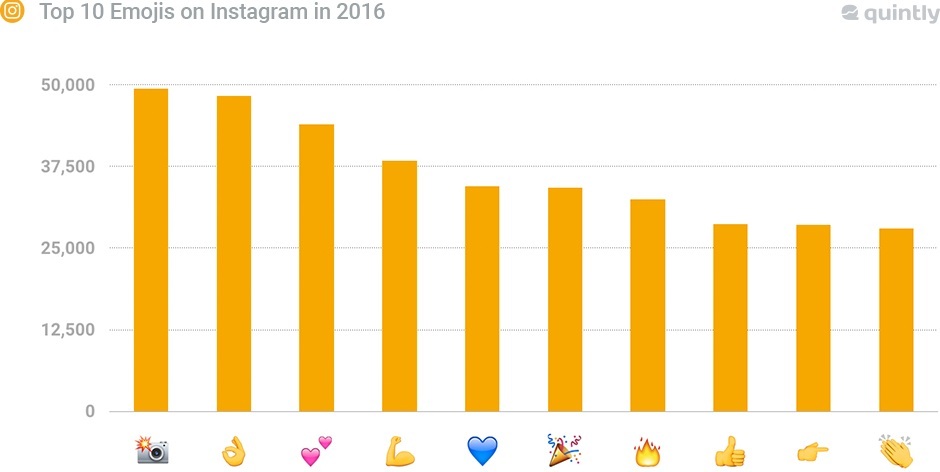
Nearly 50 per cent of all captions and comments on Instagram now have an emoji or two.

Top 10 emojies on Instagram

The same source has mentioned that posts with Emojis bring 17% higher interaction rates on Instagram.

Based on the fact that 80% of smartphone users regularly use Emojis in their daily communication, their use has been quoted as the highest growing ‘language’ in some of the countries across the globe. Worldwide brands are obviously energized and enthusiastic to cash on this new form of communication.

3. Interaction – consistently interact with your followers

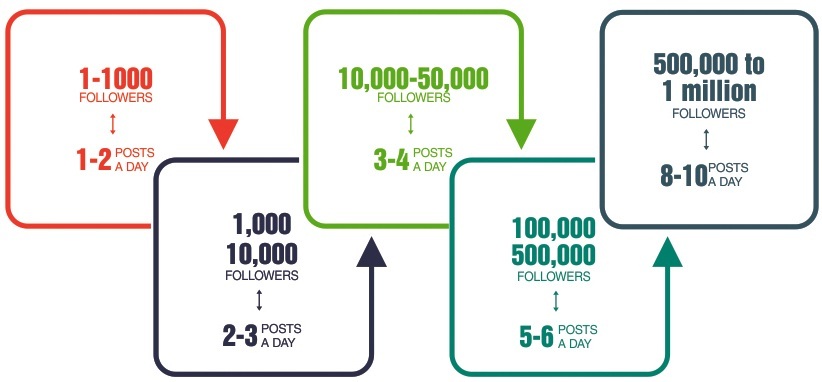
Once you get follower/s, do not shy away to stay engaged. Constantly post impressive content which your followers find relevant to their interest and business. Avoid throwing random posts, i.e. once in a week or ten in a go, as far as possible. At least, twice a day posting is requisite. Once your followers start increasing, you can start posting three to four times a day. Consistency matters most!

According to Anthony Carbone, “If you stick to a niche and show authenticity and passion in your posts, you will find a strong following”

The more people you can dynamically involve and persuade to comment on your content (images/videos), the better for you. Since it will inculcate the interest for others who want to contribute or comment on your content as well.

Engage-Cutomers-Using-Instagram-Post-1

A good example of how to stay engaged with your customers is well set by Starbucks. It is considered as one of the top brands on Instagram. Starbucks often appreciates their followers/customers by giving a shout-out with cool images. This is how they had updated their Facebook cover image using Instagram post.

4. Networking – create a positive community

Once you will have an active profile, you will surely start getting followers of your niche. But the main question here is retention! You need to retain them as your dedicated followers.

This is, in fact, the most important, most tricky, and most significant matter for any social media account. You need to build a network of your domain and keep them engaged. Interact with them, share their posts, give opinion/comments on their posts, ask them relevant questions, reply to their questions, and keep having all such sort of communication. In addition, stay away from controversial posts. It can badly impact your brand value. Build a vast network of your industry and create a positive community through your posts and engagement.

Follow your followers and work hard to turn your following into followers.

5. Amount of information – do not bore your audience with information overload

No doubt consistency is inevitable, but if it lacks harmony and relevancy of content, it results in either spamming or information overload. Keep your frequency correct and consistent. Rather than preaching them, engage with them. It’s better to ask sometimes, they should feel being valued. Dig out meaningful interaction from them.

The ideal proportion of posts based on followers suggested by industry experts are:

Instagram Followers by industry experts

6. Free tools – make the most use of Instagram marketing tools that are free

Instagram also provides free analytics tools for business profiles; prudently and sensibly make the most use of them to market your products and services.

For example, “insights”, an analytical tool, provides you access to engagement data. If your account is initially signed up as a personal account for your business, do get switched to a business profile. That’s how you can cash advantage of the free tools that businesses use to track the shape of their brand on Instagram. ‘Insights’ assists you understand your audience, provides you data on posts with most impressions, engagements, and shares. Ultimately, you will conclude which posts are effective and which ones are not working well with your audience.

With SocialBakers, you can get a FREE report on the most engaged Instagram posts. If your Instagram followers are below 25,000, you can use Simply Measured to check your highly popularized posts.

Alternatively, there are many other scheduling tools available. With the help of tools like Buffer, Hootsuite, Sprout Social, Autogrammer, and others post your content when your audiences are online and earn more engagement.

7. Promotion – utilize cross-posting function

As a business, one normally stays active and present on all possible platforms. Now, practically speaking, not all your Twitter followers are your LinkedIn buddies and not all your Instagram followers know about your presence on Google Plus.

Here, to expand your relevant reach and knock your target audience from all possible angles, you need to do cross-promotion of your own posts.

A research conducted by Harvard Business School reported that retailers using cross-media marketing are more profitable than those that use only one channel for promotion.

Invite your followers from other networks to visit your Instagram profile and build your network. Whatever posts get better engagement on Twitter or Facebook, repost them on Instagram too and vice-versa.

8. Content – repurpose content from other related sources

As stated in earlier paragraphs, effective and successful Instagram marketing

needs consistent posts related to your products and services. It is well obvious that every time coming up with creative and engaging posts is not as easy as it seems. That’s where repurposing content or curating content offers a hand of help.

As per Amanda DiSilvestro, Content repurposing is your hidden online marketing gem.

It’s absolutely fine to use other content which is relevant to your products and services provided you either have tagged or mentioned the original poster. Tagging is the best way, you need to give the credit to the original creator, and that’s how it becomes a completely ethical marketing practice and does not fall under the black clouds of plagiarism.

Tagging provides you with another major benefit of engagement. You may receive like or report from the person whom you have tagged and your post can easily reach to their audience. You need to ensure that the posts which you wither repurpose or curate are relevant to your followers.

9. Engage with influencers – you need them!!

According to KISSmetrics, 70% of Instagram users have already looked up various brands on the platform and actually want to consume their content

Here comes the power of Instagram influencers in the picture. Instagram beats all other massive social networks like Facebook and Twitter when it comes to influencer marketing. This is because the other platforms share information whereas Instagram is about sharing experiences with the help of visual content.

Your content shared, acknowledged, or praised by any influencer can embark a real positive image on your followers.

To reach on the peak in no time, we suggest you make use of the tool, Revfluence. The Revfluence platform enables you to create original content with influential content creators that can drive new customers and followers for your brand.

CLOSING THOUGHTS

If you have an online business, why can’t you have a strong social media presence too? Social media marketing via Instagram can assist you to achieve your targeted business goals with much of the ease.

Instagram has very dedicated users, who often use it daily. It provides a great social media marketing platform to reach potential customers across the world. Use Instagram extensively and appropriately, and grow bigger!

Tips for the startup: Outsourcing to freelancers

Being a startup, one has to face many challenges in the initial period. Normally, startups face common concerns like lack of finance, inadequate resources, high employee turnover, inefficient time management, and lesser projects in hand. However, the journey from a startup to an established brand isn’t much hard-hitting or unattainable, but it needs a good amount of patience, analytical skills, and timely execution of planning.

The biggest challenge for any startup is to strike a balance between providing value and utilizing limited resources in an effective manner.

benefit from outsourcing and freelancing Startup

Startups aim to provide value in terms of innovation, quality, and convenience, albeit having limited resources and may be facing intense competition to be a pioneer in the market. In the initial period, startups can’t afford to recruit a lot of many employees. They employ people based on project requirements. And hence, they prefer an alternative approach that many other companies have actually utilized during their startup phase, i.e. outsourcing. Outsourcing some of the secondary tasks to other companies or freelancers can help startups to meet deadlines with minimal cash outflow.

How outsourcing and freelancing can help startups?

Most of the startup entrepreneurs prefer to outsource some of their tasks to the freelancers or hire dedicated resources for other than core tasks during the project tenure.

Outsourcing of some of the tasks provides several benefits to startups, as listed below:

1. Focus on organizational growth

Entrepreneurs can pay special attention to core tasks if their secondary tasks are outsourced to experts / dedicated resources. As an entrepreneur, you must experience the constant pressure to stay on top of industry trends, keep updated with and ahead of your competitors, and look forward. At times, freelancing, freelancer are blessings in disguise.

Most popular business tasks preferred for outsourcing are

  • Social media marketing
  • Customer services
  • Search engine optimization
  • Content marketing/copywriting
  • Web development and coding
  • Web designing
  • Accounting and bookkeeping
  • Payroll processing
  • Tax preparation and filing
  • Event management

Depending upon organizational core function, management decides what tasks are better to outsource. For example, if you are a digital marketing agency, you can opt for outsourcing payroll processing, accounting and tax filing tasks. On the other hand, if you are into the accounts and finance sector, you can outsource website development, website designing, and online marketing.

2. Increase inefficiency

When non-core tasks are outsourced, your productive time can be focused on organizational core tasks. Moreover, you can get done your secondary tasks from experts and skilled professionals. Furthermore, there are some of the special benefits of outsourcing. Freelancers are stoutly dependent on five-star client feedback and mouth-to-mouth advertising. In such cases, delivering high-quality projects on time is their key concern.

Most of the freelancers handle one client at a time in order to provide quality output and maintain their dependability, so you’re at the centre of their attention. So as a whole, outsourcing tasks to skilled freelancers increase the organization’s efficiency.

3. Reduction in risks

An underperforming employee is a significant cost to the company. Because they either fail to deliver timely or provide the output that is below par.

According to HR, it can take a while to get rid of an underperforming employee. In case, an organization has an obligatory long-term contract with a service provider, it can be complex and costly to avoid it if you need to.

When you prefer outsourcing, it reduces that risk, particularly for short-term arrangements while you see how a freelancer works. If a company is not satisfied with the output or behaviour of a freelancer, it has no obligation to continue with that resource or hire them again beyond the original contract.

4. Savings on cash outflows

The decision of outsourcing is a major strategic one for most companies since it involves evaluating the potential cost savings against the consequences of a loss in control over the product or service. You can employ the best and most talented workforce as freelancers within your restricted budget to get done technical tasks. Outsourcing costs form a part of your variable costs and hence your fixed costs remain static regardless of total output.

Steps to successful outsourcing and freelancing for startups

According to Richard Branson, everything in your business can be outsourced, if you are not emotionally attached to doing it all.

Are you ready to outsource your non-core or technical tasks to freelancers? Here are the handy tips on how to find a perfect freelancer to whom you can outsource.

  • Determine the task which you want to outsource
  • Search for freelancers on sites like Elance, Fiverr
  • Check the credentials and past work of freelancers
  • Establish procedures and benchmarks to get them on board
  • Set expectation levels with respect to work, timeliness, quality, and payment
  • Stay in touch with them during the project tenure and provide them required assistance
  • Take follow-up on time to time basis
  • Provide feedback
Steps-For-outsouring-and-freelancing-Startup-

Closing thoughts on outsourcing and freelancing

Most of the millennial today prefer to take up freelance projects as compared to fix the 9to5 job. This trend is growing and is projected to show an upward shift in the coming future. A number of online services such as Elance-oDesk, upwork, BidModo and others serve as virtual marketplaces for contractors and business owners to connect and begin working relationships. Future of freelancers is indeed bright and the time is not far that they will establish themselves as an entrepreneur based on the outsourced projects in hand.

Startups should take the best possible advantage of this trend and establish themselves as a strong brand in an optimal manner. Here are a few examples of large startups that have thrived using this strategy to launch their highly-valued businesses:

  • Skype
  • Klout
  • Appsumo
  • Slack
  • Staff.com
  • GitHub
  • MySQL
  • Net2Text
  • MindSpark
  • Mailburn
  • Opera
Closing thoughts on outsourcing and freelancing Startup

Feel free to share your insight in the comments box with regards to the trends of outsourcing, freelancing, entrepreneurship and startups. We’d love to hear from you.

How To Setup an eCommerce Store In Australia?

This post is by guest author, Umair Qureshi. This article has been edited and published with the author’s permission.

Australia is the 7th largest economy in the Asia-Pacific region and the 12th largest in the world. Since the last two decades, Australia has enjoyed uninterrupted economic growth, a result that is reflected in the per capita GDP of the country (the fifth highest in the world today). World Bank Group ranks Australia as the 15th easiest country to set-up and runs a business. Furthermore, the establishment process of e-commerce stores is so easy that you can set up a new business in just two days. Here, we shall focus on the process and potential hurdles of the establishment of e-commerce stores in Australia.

Establishment of an eCommerce store in Australia

For people who like to crunch numbers, here are some interesting statistics and facts pertaining to the Australian economy and eCommerce scenario in perspective:

Australia’s eCommerce sales were more than $20 billion in 2016 and, are estimated to exceed $24 billion by 2018.

eCommerce store in Australia

Australian eCommerce customer demographics are mostly dominated by the youth with the age curve around 30 years. This means a somewhat limited market as of now. However, this also implies that there is a huge potential for growth in the upcoming years. The number of online buyers is steadily increasing. At the moment, the number of online transactions is low, but the cart size is on the rise. All these cumulatively indicate that more and more people are comfortable with online shopping.

Australia is fortunate in terms of eCommerce and online business because it has a clear-cut high demographic yield that responds well to the market. 90% of online transactions in Australia involve three or fewer brands. This can also be interpreted as brand loyalty because customers trust the brand for the quality of products/services and remain loyal to the chosen brand. Therefore, it is important that an online store should establish itself as a trustworthy brand in the market.

Now, running an eCommerce store in the competitive Australian market is not that easy. Although there are a number of platforms that streamline the process of setting up and managing online stores, you as the owner/manager should also be well versed in the relevant fields such as logistics, referencing, and customer management.

So, if you wish to launch and manage an online store in Australia, read through this blog. This blog will help you to avoid the hurdles that have the potential to sink many online stores.

The process to Follow to Establish an E-commerce Store in Australia

The success of any business is dependent on proper planning and following a well-prepared plan. Setting up an eCommerce store in Australia is a step-by-step process that requires thorough planning and attention to minute details.

I will now present several important pointers that will help you come up with proper planning and action items for your business setup process.

1. Choose Your Legal Form

Opening an online store begins with the legal recognition of the brand/store. You will have to define the legal status of your store before registering it with the relevant services such as the Australian Competition and Consumer Commission (ACCC). This authority allows a registration number to your business. You could choose any legal status you see fit. However, I recommend that you opt for being registered as a self-employed entrepreneur or a sole proprietor. It is always best to consult an expert (an accountant or a business advisor) at this point.

2. Draft a Business Plan

A business plan documents all the required details about how your store will be established and how will it function. Many people skip this important step because creating a business plan appears too cumbersome to follow. However, following this step allows you to analyze your action plan and ensures that your project is on the right track at all times.

3. Choose A Domain Name

The choice of the domain name pretty much determines the future of your eCommerce store. Plan to invest several hours in discovering the right domain name for your store. A number of online tools (like Mashable, shopify) help you in choosing the best name for your new store. Remember that your domain name has to be catchy and unique.

4. Choose Your Hosting Service

Very few people actually know how to set up and manage servers. Even if you are among the very few of such technical experts, it is still a tedious and time-consuming process for you. I recommend that you opt for managed cloud-based hosting for your online store. This way you will be able to sidestep all server related issues (including security) and focus on your business full-time.

You are definitely wondering: which hosting provider to choose for your e-commerce store? A very legitimate question indeed! Choosing the right eCommerce web host, as Cloudways helps you by providing:

● 24x7x365 chat supports so that you are able to get quick help at all times.
● A powerful stack comprising of high-performing and optimized caching technologies.
● Auto-scalability with almost zero downtime.
● Dispersed data centres to reduce latency and target your audience more effectively.

5. Create the Store

There are many platforms in the market which you can use to open an online store. Depending on your requirements and technical expertise, you can choose Woo CommerceMagento, Prestashop, Opencart, or others. Some of these platforms offer turnkey e-commerce solutions, while others require extensive design and development skills. Other platforms request for HTML and CSS skills. A competent developer who specializes in eCommerce solutions could prove to be an ideal partner.

6. Standards and Technical Regulations

Suppliers and manufacturers have a legal and moral obligation to ensure that their products are safe for consumers to use. All products must comply with the appropriate safety standards, contain clear instructions for proper use, and include warnings about probable abuse. If a product does not meet the mandatory standards as set by Australian authorities, there is a risk of legal actions against the business.
The Australian Competition and Consumer Commission (ACCC) requires compliance with product safety, information standards, and the prohibition of dangerous goods as declared in the Trade Practices Act. The “Fair Trade Offices” also play an important role in the safety of products.

7. Finding and Dealing with Suppliers

As an eCommerce store owner, reliable suppliers should be of utmost and important priority. For this, explore your industry to discover wholesalers. Once you have the suppliers lined up, you need to set up logistics.

Many people prefer handling the supply lines through the post office. However, third-party logistics partners such as DHL are also popular business partners. Whatever your choice is, it is essential to negotiate an advantageous contract in your favour.

8. Manage the Inventory

No customer, willing to buy, likes the “Out-of-Stock” notice. To avoid this (embarrassing) situation, it is important that you pay close attention to inventory management. This is an ongoing process and requires good relationships with your suppliers and logistics partners.

Sales data analysis is an important part of inventory management. Over a period of time, you will acquire the skill of juggling between often contrasting requirements of inventory management.

9. Define (Legal) T&C and Policies

Well defined and easy to understand policies are one of the essential requirements for any eCommerce store. Many customers often check out the payment and return policies prior to finalizing their purchase decision.

In order to come up with an ethical and concrete set of terms and conditions, ask a lawyer to go through your draft of T&C and policies. He will ensure that your draft complies with the existing Australian consumer protection laws.

10. Build Your Online Presence

“You can’t just open a website and expect people to flood in. If you really want to succeed you have to create traffic.”- Joel Anderson, Walmart CEO

Once your e-commerce site/store is ready, you have to build your online presence in order to reach new customers and build rapport with them. This step demands careful planning and working with vendors and suppliers so that you could build a solid and trustworthy online presence on social media channels. This necessarily involves good digital marketing strategies that include an email campaign, a customer loyalty program, a blog on a persistent basis, and a proactive presence on multiple social networks.

Closing thoughts – Now Realize Your Dream

As I mentioned earlier in this article, Australia is the country where people are not at all stranger to online shopping. Proper planning and meticulous attention to details are the real keys to the success of your online store in Australia.